We love ourselves when we breathe through the fire of pain, and refuse to let it harden into hate.
-Valerie Kaur
A few weeks ago, Sam took a broken chainsaw to a local repair shop.
Through an unfortunate paperwork snafu, Sam believed the work on the chainsaw had been paid for, mainly because he had a cleared check in hand. The shop owners thought it had not.
A wise approach would have been for everybody to get curious about that and check their books.
That is not what happened.
Instead, yesterday, the shop owner's son called Sam and cussed him out - with two solid minutes of you MFing MFer, stupid a**hole and the like.
Sam's reply was, "is this a joke?" and the guy hung up.
It was 7am and he had his phone on speaker in our living room. Not the best way to start our day.
Since then, I've run 1000 revenge scenarios in my mind, ranging from a filthy Google review, to in-person humilation, simply to prove that people don't get to behave that way - especially since the error was theirs too.
But with each scenario I considered, I felt afraid, and that fear has been running like a motor in my heart since yesterday.
Maybe you know the feeling.
|
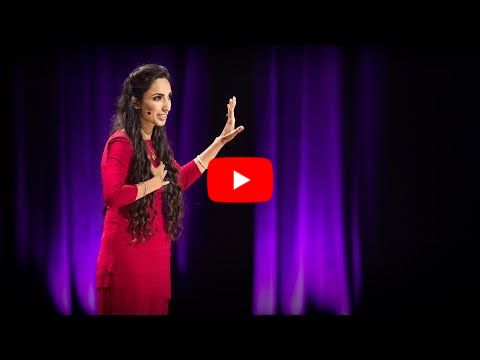
Then I thought of Valerie Kaur.
I had never heard of her before attending a training this spring called What Do I Do With My Anger, hosted by Father Richard Rohr.
Kaur is filmmaker, lawyer, activist and author. Her way of talking about anger and rage was not completely foreign to me. The application of it was.
Her Ted talk describes her approach to revolutionary love being like childbirth - painful, hard, bloody. The talk is 22 minutes and I encourage you to open your mind and watch it.
Be brave and hear what she is saying, because the Firestarters we feature here don't just know things in theory. They know them by deep, firsthand experience.
Kaur learned revolutionary love through the death of her Uncle, who was the first person killed in a US hate crime after 9-11. He, like her, was Sikh, and he wore a turban. He was killed outside his gas station in Phoenix, a few days after 9-11, by a man who called himself a patriot.
This Ted talk is 7 years old, but it could have been filmed yesterday.
So what about the chainsaw?
Part of my evolution as a coach, a writer, a human is to dwell in the love of God until it is my default identity - not just what I do, but who I am.
I imagine how different my life would look in that frame, and I shudder with hope.
The angst and fear in my chest, as a result of what I'm now calling The Sheridan Chainsaw Massacre, is a signal that I'm out of alignment with love: That I'm feeding the violent rage machine devouring our world, while claiming to prefer love.
Kaur says she fell into the same trap when, after 15 years, she called the Phoenix man in prison.
On the call she quickly got angry with him, defensive over a non-apology. By contrast, her surviving uncle, who was on the call too, stayed curious and WITH the man in conversation, telling him he'd forgiven him long ago. Things happened as a result.
My Beloved Rabbi talks a lot about forgiveness.
Clearly, not much sinks in with me, but I want it to. I want to be like him. The scriptures say He is the exact representation of God's nature and being. So, the best I think I can do today, is try to be steady for Sam who is in a pretty unpleasant situation and dealing with his own rage about it. Then, maybe I can wonder about chainsaw guy, rather than rage at him.
All of this feels new.
I haven't read Kaur's books yet, but her first one is loaded on my Kindle. I'd love you to watch the Ted talk and leave your thoughts in the comment section or by reply - even and perhaps especially if you have another perspective. A variety of opinion is welcome here.
One guideline for commenting: This is intended to be a safe, thoughtful, respectful room. If your words are none of those things, as is so common in the discourse now, please just take them with you to your own room.
And if my words don't feel like your jam, the unsubscribe button is below. (no hard feelings.)



Responses