I've watched the 1989 film Steel Magnolias at least a hundred times. Every time they're standing at Shelby's grave and Sally Field gives that Oscar-winning speech while her friends stand quietly by, I cry.
It feels so beautiful, so true. It's something I long for.
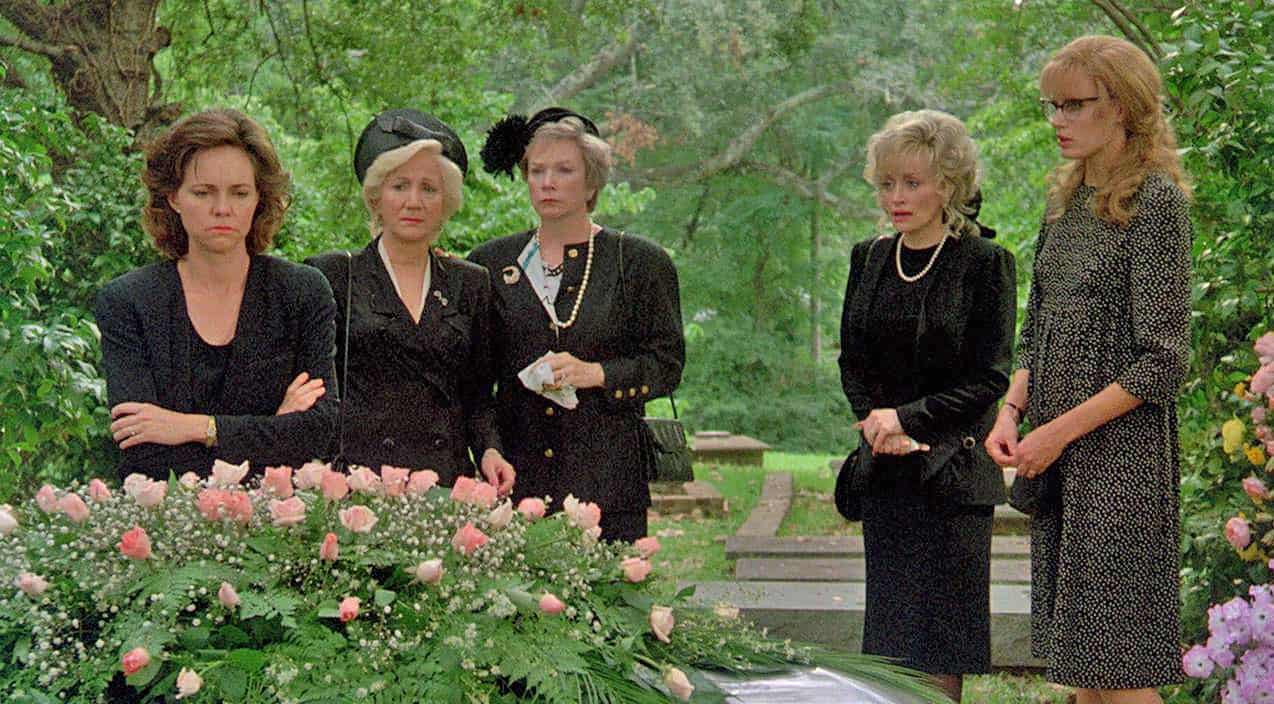
It's why we do women's retreats.
It's why all of my coaching programs are group programs. It's why I dream of having a little cliffside community in Panama - with 4-5 casitas, avocado trees with hammocks swaying underneath; an orange-walled house with outdoor seating for 20, perched above a jungle trail that cuts down to the Pacific Ocean.
Sweet, huh?
Except I'm smart enough to know, my little commune in Panama is where people come to be in community temporarily. Home is where they practice.
Don't forget, throughout the entire film, these women, who were mostly neighbors, bickered, fought, got annoyed with each other and gossiped about it. They took shots at each other, they said the wrong things and the wrong time.
But they also said I'm sorry. They forgave. They supported and advised. They laughed together, and when things went south at the Eatonton house - they all showed up and stayed.
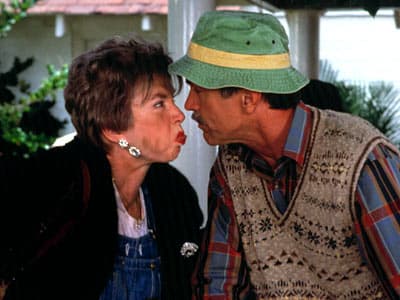
It's both. That's how communities should work.
But it seems in the last 60 years, we've forgotten that.
In our privilege and independence, we've forgotten that communities are sandpaper, rubbing the rough edges of their members. Ideally, people have accepted the primacy of the collective, over the individual, because the benefits of doing so are vast.
Perhaps that's why Jesus liked community so much.
But we don't know or share with our neighbors as much anymore, largely because we don't have to.
We might wave as we back out of our garages, but share our lawn mower, or own a comunity set of tools, or work a small garden in the culdesac together? How quaint and inefficient.
Plus, I like organic guava and those won't grow here, so no thanks.
Also, you can lose your shit on your neighbor these days without much consequence. You don't need their help building a barn next week or to borrow their mules for planting, you can just go in your single-family home and use your single-family stuff, drink your single-family scotch and avoid them.
I know I'm painting with a broad stroke here, but as a culture, we have defaulted to a more demanding selfishness because we can, and we're poorer for it.
There is a cost.
And we all know what it is: Loneliness. Isolation.
I don't think I used to care about relationships and community as much as I do now, and I suspect that's a feature of the midlife dip. It's like God is saying, "What do you think actually matters here? Your privacy? Your ability to avoid those who rub you wrong?"
Because we couldn't avoid people as much 60 years ago, we were likely better at dealing with them. More patient, more forgiving, more cooperative - we had to be. Did people enjoy their family and community members then more than they do now? I don't know, but they definitely knew them better. Forebearance is a not a gift, it's a muscle
Have you seen the little communes on Instagram?
All organic and utopian with people working hard together, swimming against the cultural current? Part of me wants to sell my stuff and buy in immediately.
Another part of me knows better.
Communities are only as good as the people in them, and the agreements they hold between them. Kind of like democracy.
We may need to relearn that. Quickly.
And since taking our toys and going home is still an option for most of us, building and maintaining a cooperative endeavor is even harder. We must relearn how to choose our words carefully, how to apologize when we're wrong, how to give grace to people when they don't deserve it, and how to set boundaries.
The rewards are clear. This is where the friends are. This is where the help is. This is the social fabric, and it's only built by bearing with one another, in proximity, over time.
Four Ways to improve your community relationships
- Communities are everywhere - work, school, neighborhood, church, family etc. We usually expect the people within them to change first so we can be happier, but it doesn't work that way. Try instead to be the change you want to see within those spaces. Discipline yourself to be more generous, patient and social.
- Give more than you take. Be the guy who always shows up, always gives, always has a kind word for the neighbors.
- Host. Dinners. BBQ's. Pool parties. Work Days. Book clubs. But do it in your neighborhood. Get to know the people living 50 feet from you. They're they ones you'll rely on in the hurricane, not your college roommate in LA.
- Pray/Meditate. Wait? Really? Yes. By setting your mind and spirit in a certain direction before your days begin, you're more likely to stay calm when you see Karen approaching with her sandpaper. 😉


Responses